
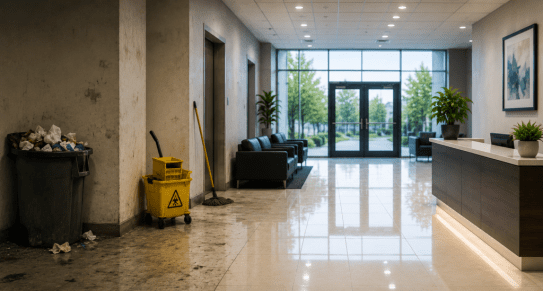
Quick answer: Poor facility maintenance costs businesses more than repair bills. Neglected cleaning and upkeep can reduce employee productivity, create poor customer impressions, increase safety concerns, accelerate wear on building assets, and lead to avoidable disruptions. A proactive commercial cleaning program helps prevent many of these hidden costs before they affect your business.
When people think about facility maintenance, they often think about repairs. But many facility problems begin long before something breaks.
Dirty floors, neglected restrooms, overflowing trash, dusty common areas, and inconsistent cleaning may seem minor at first. Over time, they can affect how employees work, how customers view your business, and how much it costs to maintain the building.
A consistent commercial cleaning program is one of the simplest ways to protect your facility and reduce the hidden costs that build up over time.

Fast Decision Guide
| If You Notice… | What It May Mean |
|---|---|
| Employees regularly report facility issues | Small cleaning and maintenance concerns may already be affecting productivity |
| Customers or visitors frequently enter your building | Facility appearance may be shaping first impressions |
| Maintenance is mostly reactive | Long-term costs are often higher than a proactive approach |
| Restrooms, floors, or common areas get repeated complaints | The current cleaning program may not match facility needs |
| You are evaluating service providers | Look beyond price and consider the operational impact of facility conditions |
What Are the Hidden Costs of Poor Facility Maintenance?
Many facility issues do not appear on a budget report right away.
A stained floor, overflowing trash bin, neglected restroom, or poorly maintained common area may seem small on its own. But these issues can create operational, financial, and reputational costs that exceed the price of maintaining the facility properly.
The challenge is that most organizations only see the visible costs. The hidden costs often go unnoticed until they begin affecting employees, customers, or operations.
The hidden costs of poor facility maintenance include reduced employee productivity, negative customer impressions, higher operating expenses, increased safety risks, accelerated wear on building assets, and avoidable disruptions.
Cost #1: Employee Productivity Declines in Poorly Maintained Workspaces
Employees spend a large part of their day inside the workplace.
When facilities are poorly maintained, employees may deal with:
- Dirty common areas
- Restroom issues
- Overflowing trash
- Cluttered spaces
- Dusty work areas
- Ongoing facility distractions
Individually, these may seem minor. Collectively, they create daily friction that can affect focus, morale, and efficiency.
A clean, organized workplace helps employees focus on their work instead of facility-related problems. If the issue is mainly tied to cleaning frequency, reviewing your office cleaning schedule may be a good first step.
Cost #2: Customer and Visitor Perception Takes a Hit
Customers form opinions quickly.
Before they evaluate your services, products, or team, they may notice:
- Building entrances
- Lobbies
- Restrooms
- Floors
- Waiting areas
- Reception desks
- Glass doors
A poorly maintained facility can unintentionally communicate a lack of attention to detail, inconsistent standards, or operational problems.
A well-maintained facility supports confidence and professionalism. This matters especially for professional offices, healthcare facilities, schools, property managers, retail businesses, and other customer-facing environments.
Cost #3: Safety Concerns Become Easier to Miss
Facility maintenance is not only about appearance.
Cleaning and upkeep can also help reduce avoidable safety concerns, such as:
- Wet floors
- Cluttered walkways
- Damaged or dirty flooring
- Poorly maintained entrances
- Overflowing waste areas
- Unaddressed spills
Not every maintenance issue creates a safety hazard. Still, proactive facility care can help reduce unnecessary risks and support a more organized environment.
For facilities with heavy traffic during business hours, day porter services can help address spills, trash, restrooms, and common areas before issues sit all day.
Cost #4: Building Assets Wear Out Faster
Building assets are expensive.
That includes:
- Flooring
- Carpet
- Furniture
- Fixtures
- Restrooms
- Common areas
When routine cleaning and maintenance are neglected, these assets often deteriorate faster.
Floor care is a good example. Dirt, debris, and moisture can wear down flooring over time. Regular sweeping, mopping, carpet care, and hard floor maintenance help protect those surfaces longer.
A proactive maintenance approach helps protect investments and can reduce avoidable replacement or restoration costs.
Is Your Facility Costing More Than It Should?
A proactive commercial cleaning program can help reduce complaints, improve employee experience, protect flooring, and create a better first impression.
Cost #5: Reactive Maintenance Raises Long-Term Costs
Reactive maintenance often costs more than preventive maintenance.
Small issues can become larger issues when ignored.
| Minor Issue | Potential Long-Term Impact |
|---|---|
| Dirty flooring | Premature floor wear or restoration needs |
| Neglected restrooms | More complaints and increased repair needs |
| Dust buildup | Additional cleaning and detailing costs |
| Poor upkeep | Higher restoration expenses |
| Deferred maintenance | Larger capital expenditures |
Addressing issues early is often more cost-effective than waiting until major corrective action becomes necessary.
Cost #6: Employee Experience Can Decline
Workplace conditions influence how employees feel about the environment they work in every day.
While facility maintenance is only one factor, employees tend to notice:
- Cleanliness
- Organization
- Comfort
- Restroom condition
- Breakroom cleanliness
- Building appearance
Employees who feel their workplace is cared for often have a more positive perception of the overall work environment.
For medical offices, staff areas matter just as much as patient-facing spaces. A strong medical office deep cleaning schedule should account for both.
Cost #7: Brand Reputation Suffers
Every physical location reflects the organization behind it.
This is especially important for:
- Professional offices
- Healthcare facilities
- Educational institutions
- Retail businesses
- Manufacturing facilities
- Customer-facing environments
A facility’s condition often becomes part of the brand experience.
For example, a clean lobby, well-maintained restroom, and polished floor may not be the main reason someone chooses your business, but poor conditions can quickly become a reason they question it.
Cost #8: Facility Managers Lose Time to Avoidable Issues
Many facility managers spend valuable time addressing issues that could have been prevented through routine cleaning and upkeep.
Examples include:
- Cleaning complaints
- Supply shortages
- Appearance concerns
- Vendor coordination
- Reactive service requests
- Repeated follow-ups
A proactive maintenance and cleaning strategy helps reduce these distractions.
If you already feel like your team spends too much time chasing cleaning issues, it may be worth reviewing the warning signs of an underperforming commercial cleaning company.
Warning Signs Your Facility Maintenance Program Needs Attention
Your facility maintenance program may need review if:
- Employees regularly report facility issues
- Restrooms receive frequent complaints
- Floors show visible wear or buildup
- Common areas lose their professional appearance
- Maintenance requests keep increasing
- Visitors comment on facility conditions
- Problems are addressed only after complaints occur
These signs often point to opportunities to improve consistency.
Proactive vs. Reactive Facility Maintenance
| Proactive Maintenance | Reactive Maintenance |
|---|---|
| Planned approach | Problem-driven approach |
| More predictable costs | Unexpected expenses |
| Consistent appearance | Inconsistent appearance |
| Asset preservation | Asset deterioration |
| Fewer disruptions | More disruptions |
Organizations that prioritize preventive cleaning and maintenance often experience fewer operational surprises.
Common Facility Maintenance Mistakes
Waiting Until Something Breaks
Many organizations postpone action until problems become unavoidable. This often increases costs and creates unnecessary disruption.
Viewing Maintenance as an Expense Only
Maintenance is often viewed strictly as a cost. In reality, it also protects assets, supports employee experience, and influences customer perception.
Ignoring Small Problems
Minor issues frequently become larger problems when left unresolved.
Lack of Consistent Standards
Without clear expectations and accountability, maintenance quality can become inconsistent from one area to another.

Want Help Improving Facility Appearance?
Office Pride can review high-traffic areas, restrooms, floors, common spaces, and cleaning frequency to help build a proactive commercial cleaning plan.
How To Evaluate Your Current Facility Maintenance Program
Ask the following questions:
- Are maintenance issues usually discovered before complaints occur?
- Do employees report facility concerns regularly?
- Are customer-facing spaces consistently maintained?
- Are maintenance costs becoming less predictable?
- Are assets showing premature wear?
- Is facility appearance consistent across locations?
- Does the current cleaning schedule match traffic levels?
- Are restrooms, entrances, and common areas consistently clean?
The answers often reveal where improvement opportunities exist.
For manufacturing and industrial spaces, this review may also include production support areas, employee entrances, breakrooms, flooring, and traffic patterns. If that applies to your building, review what should be included in manufacturing facility cleaning.
Frequently Asked Questions
What is facility maintenance?
Facility maintenance includes the ongoing care, cleaning, upkeep, and preservation of a building and its assets.
Why is facility maintenance important?
Facility maintenance supports appearance, safety, operational efficiency, employee experience, customer perception, and asset protection.
What are the hidden costs of poor maintenance?
Common hidden costs include reduced productivity, negative customer impressions, asset deterioration, safety concerns, higher long-term expenses, and avoidable disruptions.
Does maintenance affect employee retention?
Workplace conditions can influence employee experience and overall workplace satisfaction. A clean, well-maintained facility can support a more positive work environment.
Can poor maintenance impact customers?
Yes. Facility appearance often contributes to customer and visitor perceptions before they fully interact with your team or services.
Is preventive maintenance worth it?
Many organizations find preventive maintenance helps reduce unexpected costs, complaints, asset wear, and operational disruptions.
How often should facilities be evaluated?
Regular inspections and ongoing reviews help identify issues before they become larger problems. Many facilities benefit from daily, weekly, monthly, and quarterly review points.
What areas should be prioritized?
Entrances, restrooms, common areas, flooring, breakrooms, and customer-facing spaces often have the greatest impact on employee and visitor perception.
How do I know if my maintenance program needs improvement?
Frequent complaints, visible wear, increasing costs, inconsistent appearance, and recurring cleaning issues are common indicators.
What role does commercial cleaning play?
Commercial cleaning supports overall facility maintenance by helping maintain cleanliness, appearance, consistency, floor care, restrooms, high-touch surfaces, and shared spaces.
Final Thoughts
The true cost of poor facility maintenance is rarely found in a single invoice.
It appears gradually through employee distractions, customer impressions, operational inefficiencies, asset deterioration, and growing maintenance expenses.
Investing in consistent commercial cleaning is not simply about appearance. It is about protecting your facility, supporting your employees, and creating an environment where your business can operate at its best.
If recurring cleanliness issues, complaints, or maintenance costs are becoming more common, it may be time to review your current cleaning program.
Find an Office Pride location near you or request a free quote to build a proactive cleaning plan for your facility.


