
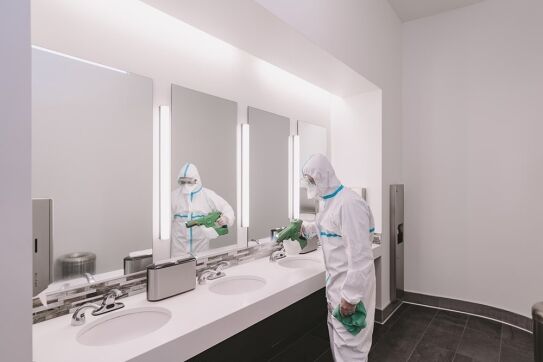
Commercial restroom cleaning checklist
Build the Restroom Schedule Around Use—not a Generic Task List
Restrooms can change quickly during a normal business day. A room that was cleaned correctly overnight may still need attention after an arrival rush, lunch period, event or shift change. Facility managers need a checklist that connects tasks, inspection points and supply checks to actual traffic.
Quick Answer
A commercial restroom checklist covers cleaning, disinfection, odors, consumables and documented inspections.
High-traffic restrooms may need checks during operating hours in addition to scheduled cleaning. The right frequency depends on use, fixture count, operating hours and presentation standards.
At a glance
Clean
Fixtures, touchpoints, floors and waste
Replenish
Soap, tissue, towels and liners
Inspect
Odor, damage, leaks and service quality
Daily restroom responsibilities
What a Commercial Restroom Cleaning Checklist Should Include
The scope should be specific enough for the facility and cleaning provider to verify completed work.
Fixtures + Touchpoints
Clean and disinfect toilets, urinals, handles, dispensers, faucets and other agreed high-touch surfaces.
Sinks + Counters
Clean basins, counters and fixtures, removing residue and standing water.
Floors + Waste
Remove debris, empty waste receptacles and clean floors, corners and edges.
Supplies + Presentation
Replenish agreed consumables, check dispensers, address visible soil and leave the room ready for occupants.
Match frequency to restroom demand
Suggested Restroom Tasks by Service Interval
These are planning categories—not a universal prescription. Adjust the schedule to traffic, facility type, operating hours and contract scope.
| Interval | Typical Tasks | What Changes the Frequency |
|---|---|---|
| Each scheduled service | Fixtures, sinks, counters, touchpoints, waste, floors and consumable checks. | Use, operating hours, fixture count and visible soil. |
| Daytime inspections | Supply levels, spills, odor, waste, blocked fixtures and presentation. | Peak periods, events, public access and customer-facing standards. |
| Weekly detail | Partitions, doors, walls, vents, ledges, edges and lower-use surfaces. | Surface condition and facility expectations. |
| Periodic work | Deep floor care, grout attention, scale removal and restorative detail. | Finish type, buildup, water quality and manufacturer guidance. |

A restroom checklist should combine cleaning tasks with supply and condition checks.
Inspect beyond visible cleanliness
Four Inspection Points Facility Managers Should Track
A practical quality review should identify recurring conditions—not just whether a room looks acceptable at one moment. Link the restroom plan to the broader facility cleaning checklist.
Consumables
Are soap, tissue, towels and liners available at the required level?
Odor Sources
Check whether odors come from waste, drains, fixtures, moisture or incomplete cleaning.
Fixture Condition
Document leaks, clogs, broken dispensers and other maintenance issues.
Cleaning Detail
Check edges, partitions, touchpoints and floors for consistent cleaning.
Restroom quality-control workflow
Turn the Checklist Into a Repeatable Inspection Process
Define the Standard
Document rooms, fixtures, tasks, supplies and presentation expectations.
Set Service + Check Times
Separate full cleaning visits from quick daytime inspections when both are needed.
Record Exceptions
Log low supplies, blocked fixtures, leaks, damage and recurring odor sources.
Review Patterns
Use inspection results and complaints to adjust frequency or scope.
Common mistake
Cleaning once does not mean the restroom stays clean all day.
When traffic is concentrated into predictable windows, a daytime check may solve the problem more effectively than adding unrelated overnight tasks.
Practical next step
Start with the busiest restroom.
Track traffic, complaints, supply depletion and inspection findings for two weeks before changing the entire facility schedule.
Need a Restroom Cleaning Plan Built Around Actual Use?
Office Pride can review facility use, operating schedules and restroom priorities before recommending service.
Frequently asked questions
Restroom Cleaning FAQs
Use these answers to define scope, frequency and quality expectations.
How often should a commercial restroom be cleaned?
Frequency depends on traffic, operating hours, fixture count, facility type and presentation expectations. Some restrooms need one scheduled service; busy facilities may need daytime inspections or multiple service periods.
What should be checked during a restroom inspection?
Check fixtures, counters, floors, waste, dispensers, consumables, odor, leaks, clogs, damage and overall presentation.
Who supplies toilet paper, soap and paper towels?
The agreement should state whether the facility or cleaning provider purchases, stores and replenishes each consumable.
Why does a restroom still smell after cleaning?
Odor may come from drains, grout, waste containers, leaks, ventilation, plumbing issues or soil that requires periodic detail beyond the routine scope.
Should restroom cleaning be documented?
A documented checklist or inspection log can clarify responsibility, show completion and reveal recurring supply or maintenance issues.
Can restroom frequency change after service begins?
Yes. Review inspection findings, occupancy and complaint patterns, then document any change to scope, timing or pricing.
Make restroom expectations measurable
Build a Restroom Cleaning Plan Around Traffic, Supplies and Quality Checks
Office Pride provides recurring commercial cleaning programs tailored to facility use and operating requirements.


