For today’s facility leaders, maintaining a commercial property involves much more than keeping floors polished and restrooms stocked. The overall quality of a building’s indoor environment has become a measurable factor in employee experience, operational performance, tenant satisfaction, and long-term asset preservation.
Indoor Environmental Quality (IEQ) encompasses the conditions inside a building that affect the health, comfort, and productivity of its occupants. While HVAC systems, lighting, acoustics, and temperature all contribute, cleanliness plays a central role in supporting a healthy indoor environment.
For businesses across Virginia Beach, Chesapeake, Norfolk, and the greater Hampton Roads region, where coastal humidity and year-round occupancy can create additional facility challenges, prioritizing Indoor Environmental Quality is becoming an important part of modern facility management.
Indoor Air Quality Starts with Surface Management
Many organizations associate indoor air quality exclusively with mechanical systems, but the condition of interior surfaces has a direct impact on the air employees and visitors breathe.
Dust, pollen, fine particulates, and other contaminants settle on flooring, furniture, vents, and horizontal surfaces before becoming airborne through daily foot traffic and routine building activity.
A comprehensive cleaning program helps reduce this cycle by focusing on:
- High-filtration vacuuming
- Dust removal from elevated surfaces
- Carpet maintenance
- Hard floor cleaning
- Upholstery care
- Routine cleaning of shared workspaces
By reducing particulate accumulation throughout the facility, organizations can help support cleaner indoor environments and improve the effectiveness of their HVAC systems.
Coastal Facilities Face Unique Environmental Challenges
Facilities throughout Coastal Virginia operate in conditions that differ from many inland markets.
Humidity, salt air, seasonal storms, and increased outdoor moisture can introduce additional contaminants into commercial buildings while creating favorable conditions for mildew, odors, and accelerated material deterioration.
Facility managers should evaluate cleaning programs that address:
- Moisture management at building entrances
- Salt and sand removal from flooring
- Increased restroom sanitation during peak seasons
- Routine floor maintenance to protect finishes
- High-touch surface cleaning in shared spaces
Adapting cleaning protocols to local environmental conditions helps buildings perform more efficiently throughout the year.
Indoor Environmental Quality Supports Workplace Performance
The quality of a building’s interior environment influences how occupants experience the space every day.
Employees, tenants, visitors, and customers notice when common areas feel clean, organized, and well maintained. Likewise, neglected facilities often contribute to unnecessary distractions, service complaints, and reduced confidence in overall building operations.
Organizations that invest in consistent facility care often benefit from:
- Cleaner shared work environments
- Improved occupant comfort
- Greater confidence in facility operations
- Stronger tenant and visitor experiences
- More professional workplace presentation
For many businesses, maintaining Indoor Environmental Quality has become part of creating an environment where employees and clients want to spend time.
High-Touch Spaces Require Strategic Attention
Not every area within a facility experiences the same level of use.
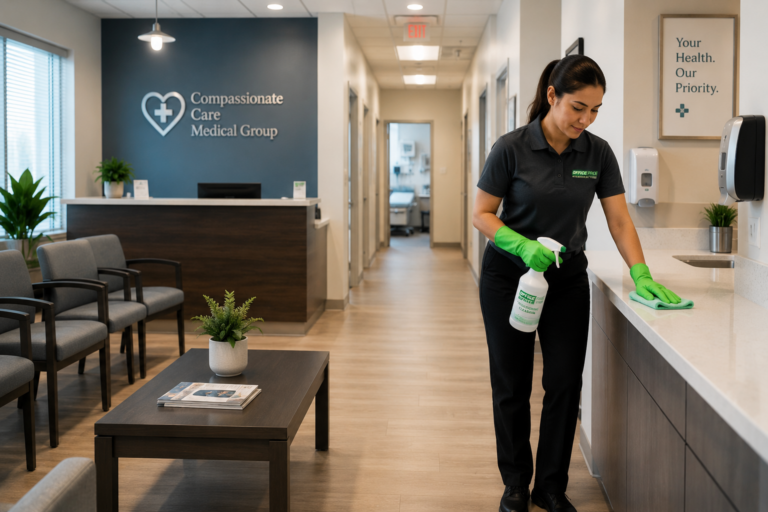
Conference rooms, reception areas, elevators, breakrooms, restrooms, and collaborative workspaces often experience significantly more activity than private offices. Prioritizing these locations helps maintain overall building cleanliness while improving operational efficiency.
Areas commonly included in targeted cleaning programs include:
- Reception desks
- Door hardware
- Shared kitchen areas
- Restroom fixtures
- Elevator controls
- Waiting rooms
- Conference tables
- Employee collaboration spaces
Allocating resources based on building usage helps create a more efficient and effective cleaning strategy.
Protecting Building Assets Through Environmental Stewardship
Indoor Environmental Quality is closely connected to asset management.
When contaminants remain on flooring, furniture, and building finishes, they contribute to gradual deterioration that increases maintenance costs over time. Preventive cleaning helps preserve the appearance and functionality of these investments while reducing unnecessary wear.
A proactive maintenance program can help extend the service life of:
- Carpet systems
- Luxury vinyl tile
- Ceramic flooring
- Upholstered furniture
- Painted surfaces
- Interior glass
- Architectural finishes
Protecting these assets helps organizations better manage operational budgets while maintaining a consistently professional facility.
Data and Quality Assurance Drive Better Outcomes
Today’s commercial cleaning programs increasingly rely on measurable performance standards rather than visual inspections alone.
Facility managers are looking for cleaning partners that utilize structured quality assurance processes to verify service consistency and identify opportunities for continuous improvement.
Performance indicators may include:
- Routine facility inspections
- Cleaning quality audits
- Service documentation
- Corrective action tracking
- Occupant feedback trends
- Preventive maintenance schedules
Objective reporting provides greater transparency while supporting long-term facility planning.
Cleaning Is Part of Business Continuity
An optimized indoor environment contributes to the daily reliability of a commercial facility.
When cleaning programs are integrated into broader facility operations, organizations can reduce avoidable disruptions, improve consistency across multiple departments, and maintain spaces that are ready to support employees and visitors every day.
Whether managing an office campus, healthcare practice, educational facility, financial institution, or industrial operation, a structured cleaning program supports the operational standards businesses work hard to maintain.
Investing in Better Indoor Environments Pays Long-Term Dividends
Indoor Environmental Quality should not be viewed solely as a maintenance objective; it is a business strategy.
For organizations throughout Virginia Beach and the surrounding Hampton Roads area, maintaining a clean, healthy, and professionally managed indoor environment supports operational efficiency, protects valuable building assets, and reinforces confidence among employees, customers, and tenants.
As expectations for commercial facilities continue to evolve, businesses that prioritize Indoor Environmental Quality position themselves to deliver stronger workplace experiences while reducing long-term maintenance challenges. A thoughtfully designed commercial cleaning program is one of the most practical ways to support those goals and create lasting value throughout the facility.